Body Structure
1. Change log
| ISS/REV | Date | Modifications | Created/modified by |
|---|---|---|---|
| 1/0 | 11/17/2015 | First issue | Juhyeon Kim [email protected] |
| 1/1 | 01/08/2016 | Jungjae Park [email protected] | |
| 1/2 | 01/14/2016 | Concept design/Result | Juhyeon Kim [email protected] |
2. Design focus
2.1 Safety
- Body structure should effectively protect internal systems.
- Metal frame must be electrically insulated to prevent short circuit.
2.2 Assembly
- Secure sufficient space for electrical cables.
- All bolts and nuts must be perfectly assembled.
2.3 Aesthetic impression
2.4 Stability
- Mass center is supposed to be on geometric center line.
2.5 Cost
- Design as cheap as possible without losing safety.
2.6 Storage Efficiency
2.7 Mass
- Design as light as possible without losing safety.
3. Concept design
3.1 System requirements
| System Req.Num. | System Requirement |
|---|---|
| SNUSAT-STR-01 | The whole cansat’s weight must be lower than 1050g. |
| SNUSAT-STR-02 | The whole cansat should be smaller than Φ146mm, H 240mm including a parachute. |
| SNUSAT-STR-03 | The cansat cannot push a wall of a rocket. |
| SNUSAT-STR-04 | The cansat structure must tolerate at least 500g shock. |
| SNUSAT-STR-05 | The parachute must be deployed at least in 2 seconds after deployment from the rocket. |
| SNUSAT-STR-06 | The cansat can cross over at least 15mm obstacles. |
| SNUSAT-STR-07 | The vision angle of cameras should be at least vertically 60 degree and horizontally 90 degree. |
| SNUSAT-STR-08 | The cansat can tolerate vibration of 15g, 30~2000Hz at least 1 minute. |
| SNUSAT-STR-09 | The parachute can relieve the impact shock from 4km fall lower than 500g. |
| SNUSAT-STR-10 | GPS, IMU, Communication system should work normally when they’re completely set up. |
| SNUSAT-STR-11 | No interference between wheels and the body structure when the satellite drives. |
| SNUSAT-STR-12 | The satellite should maintain stable condition resisting external interference in forward/backward movement. |
| SNUSAT-STR-13 | The satellite should maintain stable condition in acceleration and brake. |
| SNUSAT-STR-14 | The cameras have to face at horizon in ±10 degree. |
| SNUSAT-STR-15 | The parachute have to be decoupled from the body in 5 seconds after landing. |
| SNUSAT-STR-16 | Every part should be assembled without mechanical interference |
| SNUSAT-STR-16 | The Structure system should withstand over 100 ℃ |
3.2 Octangular frame
The ARLISS Cansat regulation asks the size of the satellite to be smaller than Φ146*240mm cylinder. We have designed the body structure as a square pillar shape at first. However, for the maximum space efficiency, we invented an octagular body frame cutting off four edge of the square. This design increased internal space of the satellite without an increase in total diameter.
3.3 Tap holes
A Tap hole is the female portion of the mating pair (e.g. a nut) which has screw threads. This type of hole is formed by tool named ‘tap’ and the process of cutting or forming threads using the tap is called tapping. Using the tap hole properly, we can mate parts very easily for not using nuts. We decided to use this type at the mating portion between frequent assembling parts. Therefore, we drilled tap hole on 4 holes mating between the system stack cover and body frame.
3.4 Reducing weights and fillets
As all cansats for ARLISS have to be weighted under 1050g, we should design the satellite as light as possible. The satellite’s weight can be easily reduced by cutting off some portion of structural frames. We successfully decreased weight of the cansat up to 109g by removing relatively useless portions of the aluminum structures; the force flow is relatively low in the relatively useless portions. Moreover, we processed fillet at every corner of cut portion to preserve strength as much as possible.
- Detail design
4.1 Assembly view
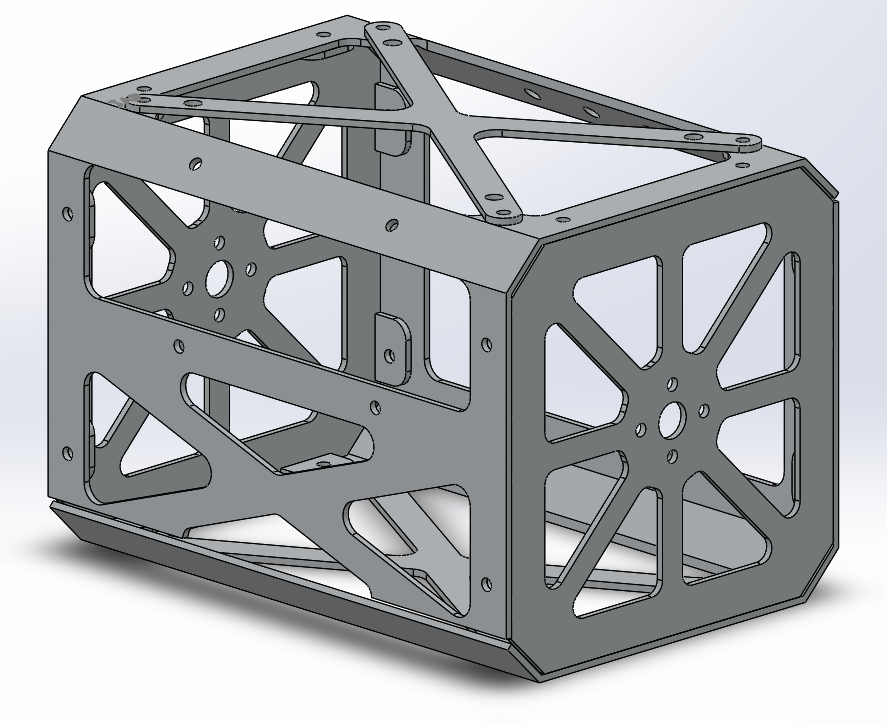 Figure 1 Front view
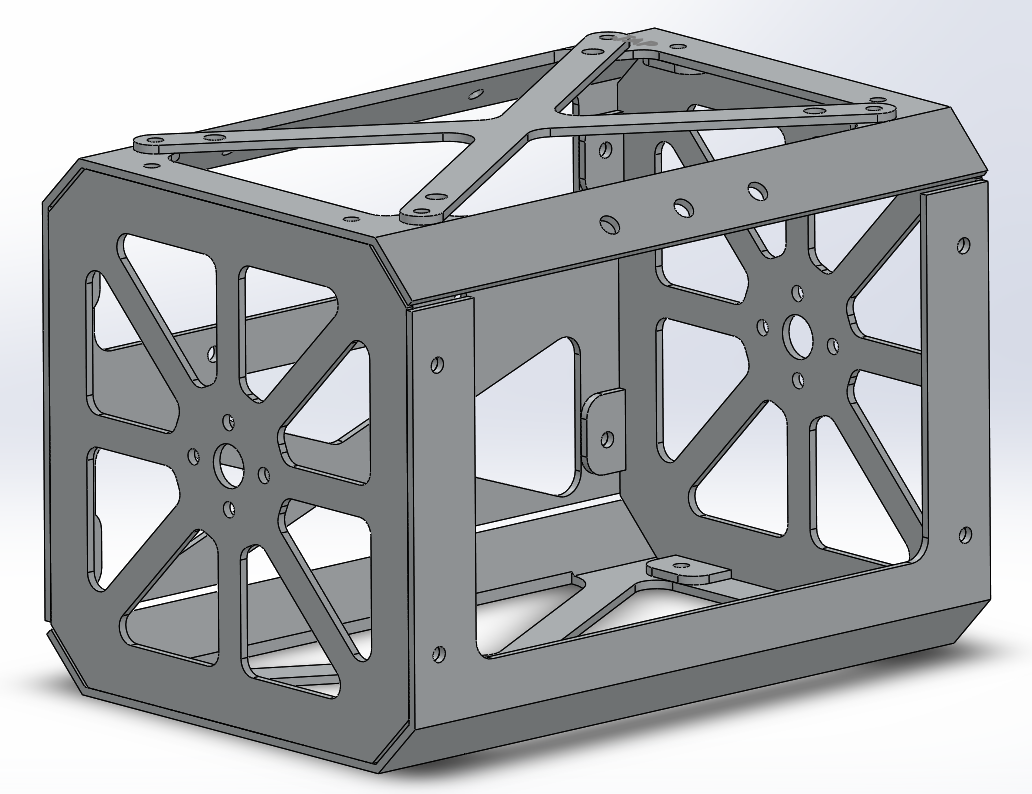 Figure 2 Rear view

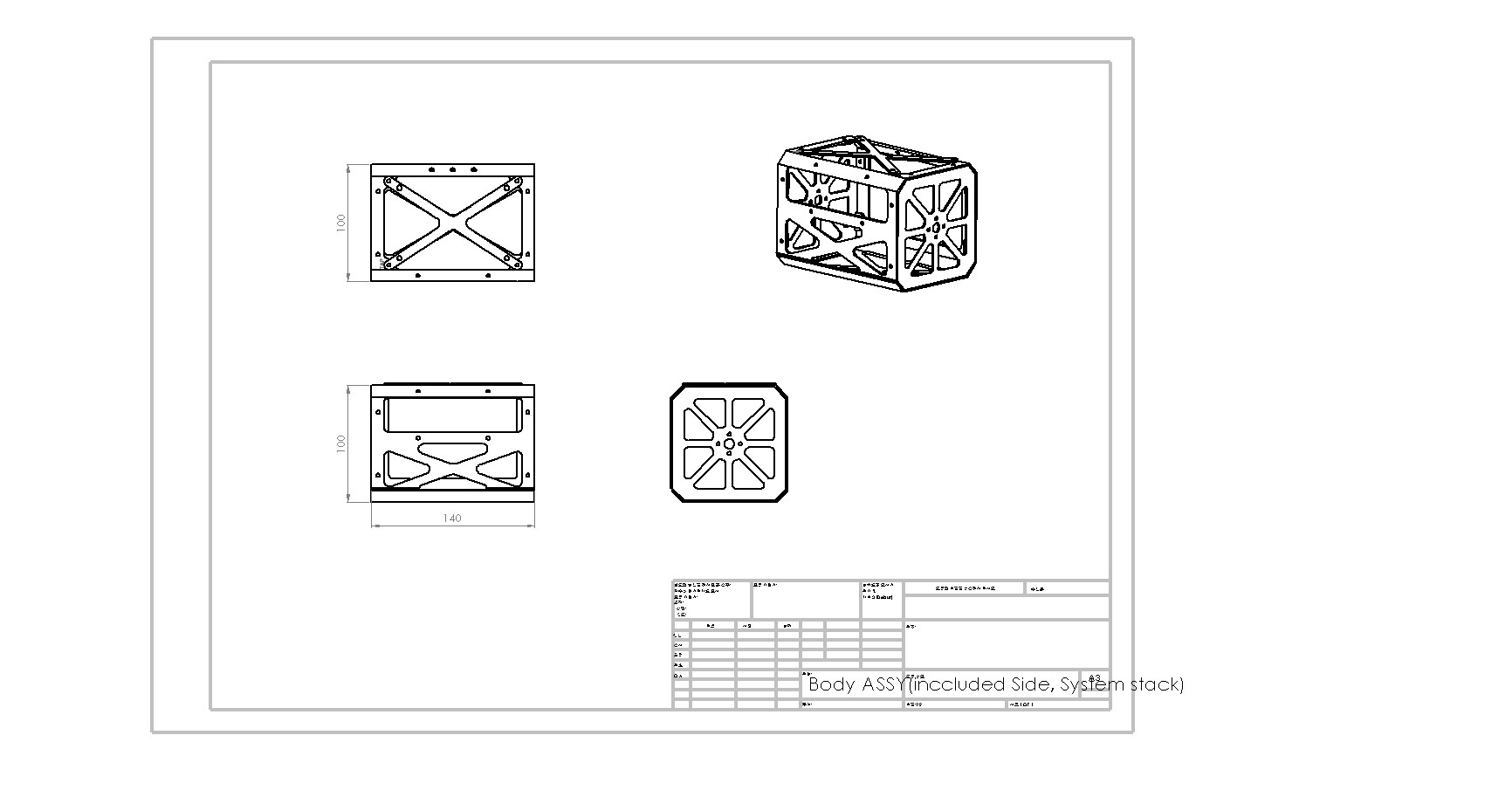 Figure 3 Drawing for Body structure
4.2 Design drawing
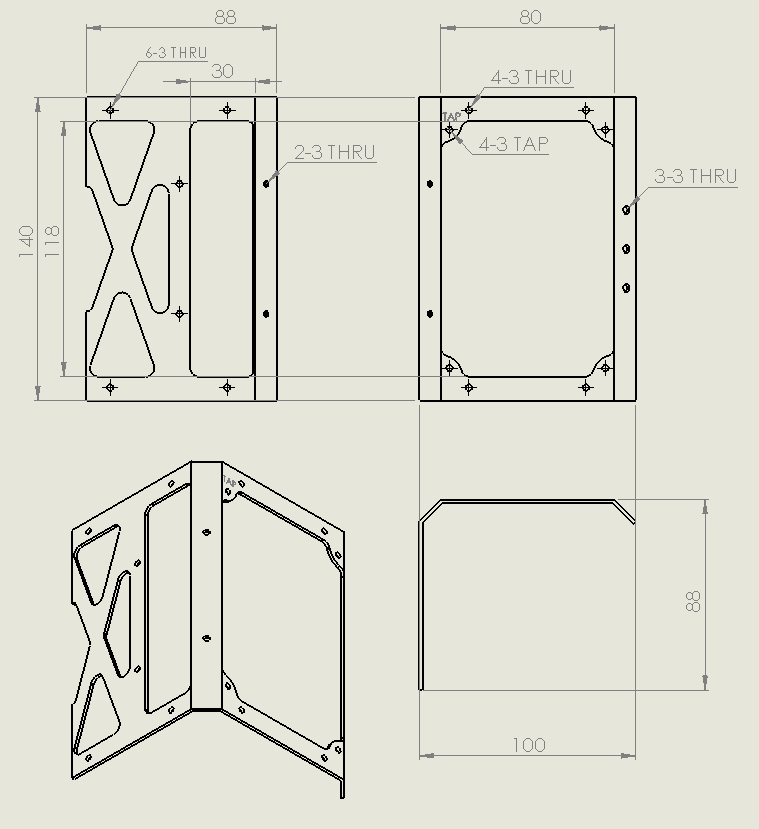 Figure 4 Drawing for Body 1
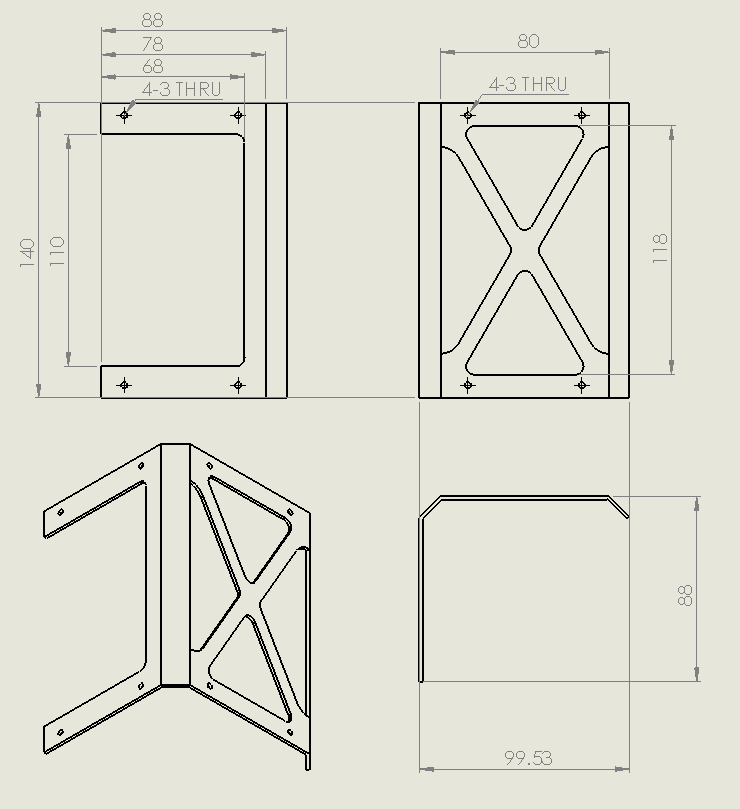 Figure 5 Drawing for Body 2
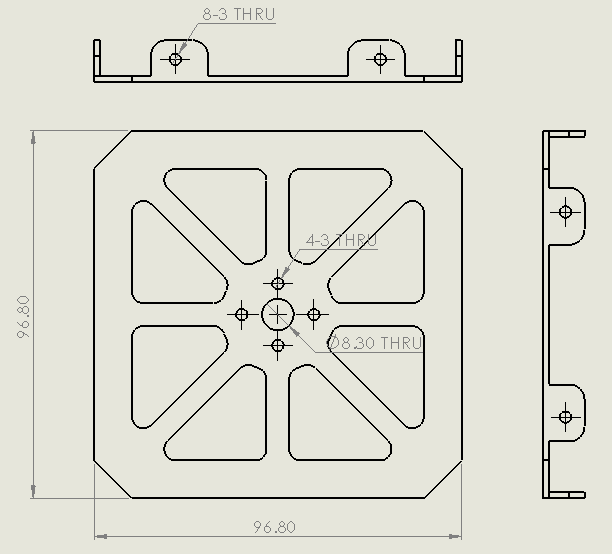 Figure 6 Drawing for Side
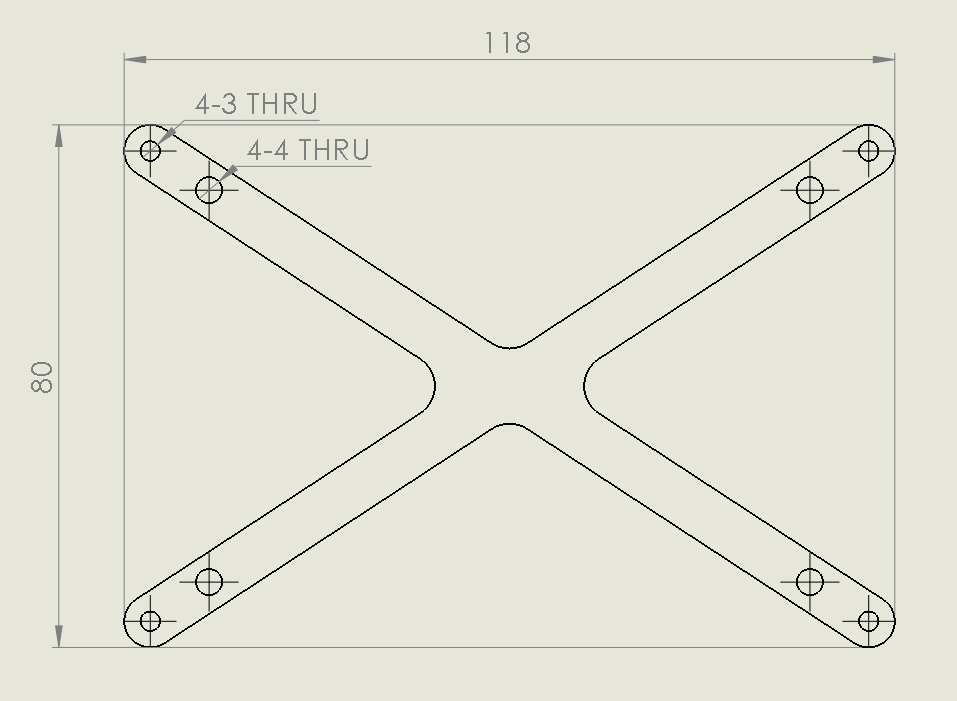 Figure 7 Drawing for System stack cover
5. Results
5.1 Environmental test We dropped the satellite from about 20m height with the parachute and the capsule to test whether the structure frame can protect internal electric systems successfully. In result, even though the capsule teared a little bit, the whole system got no damage.
5.2 Launch
Our cansat fell free from 4km above and crashed the ground. Consequently, the power line of the satellite was destroyed by shock of impact. The body structures are bent about 30 degree. We concluded the reason of free-fall is destruction of capsule. The problem was the capsule was too weak to withstand shock inflicted by parachute deployment on flight.

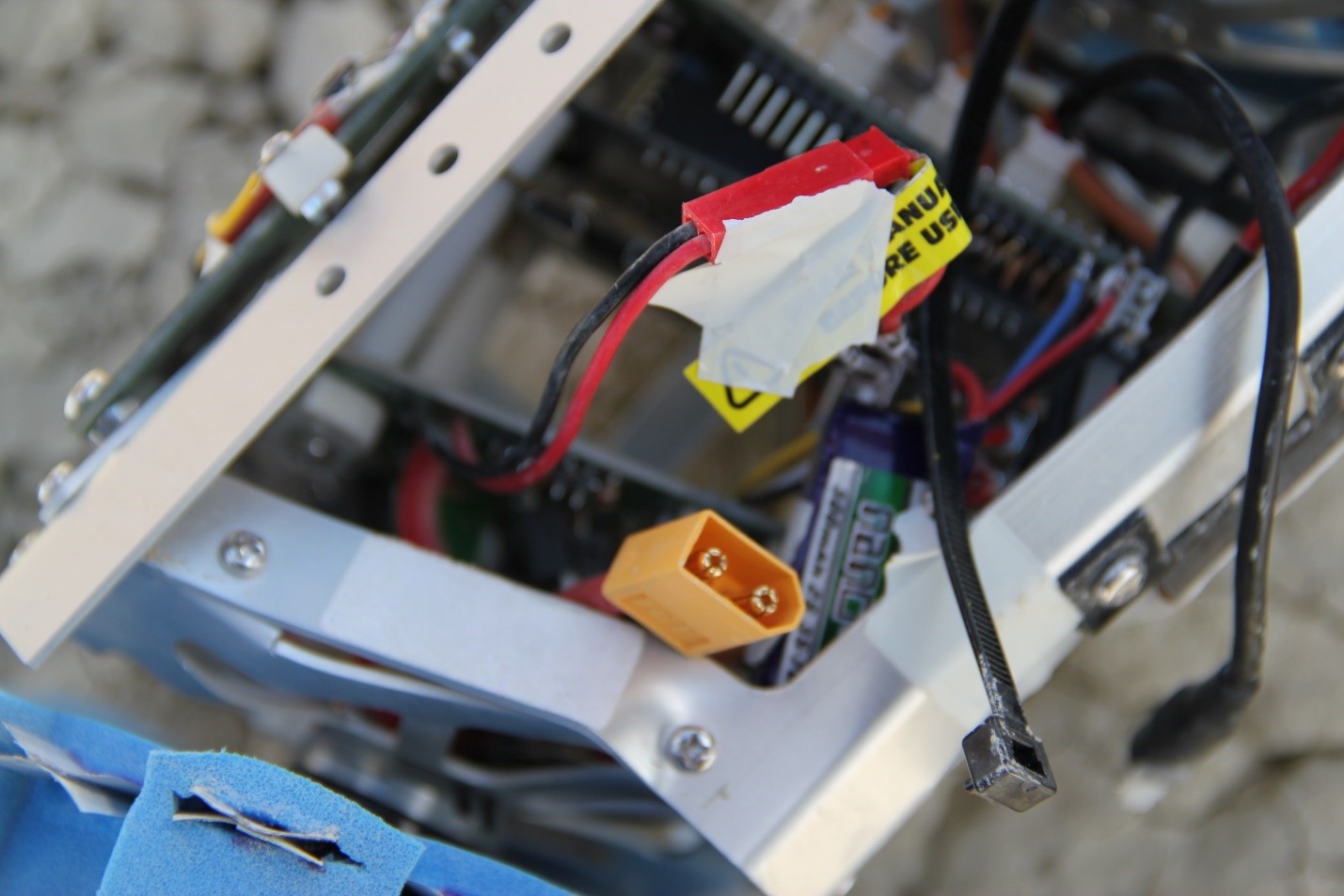
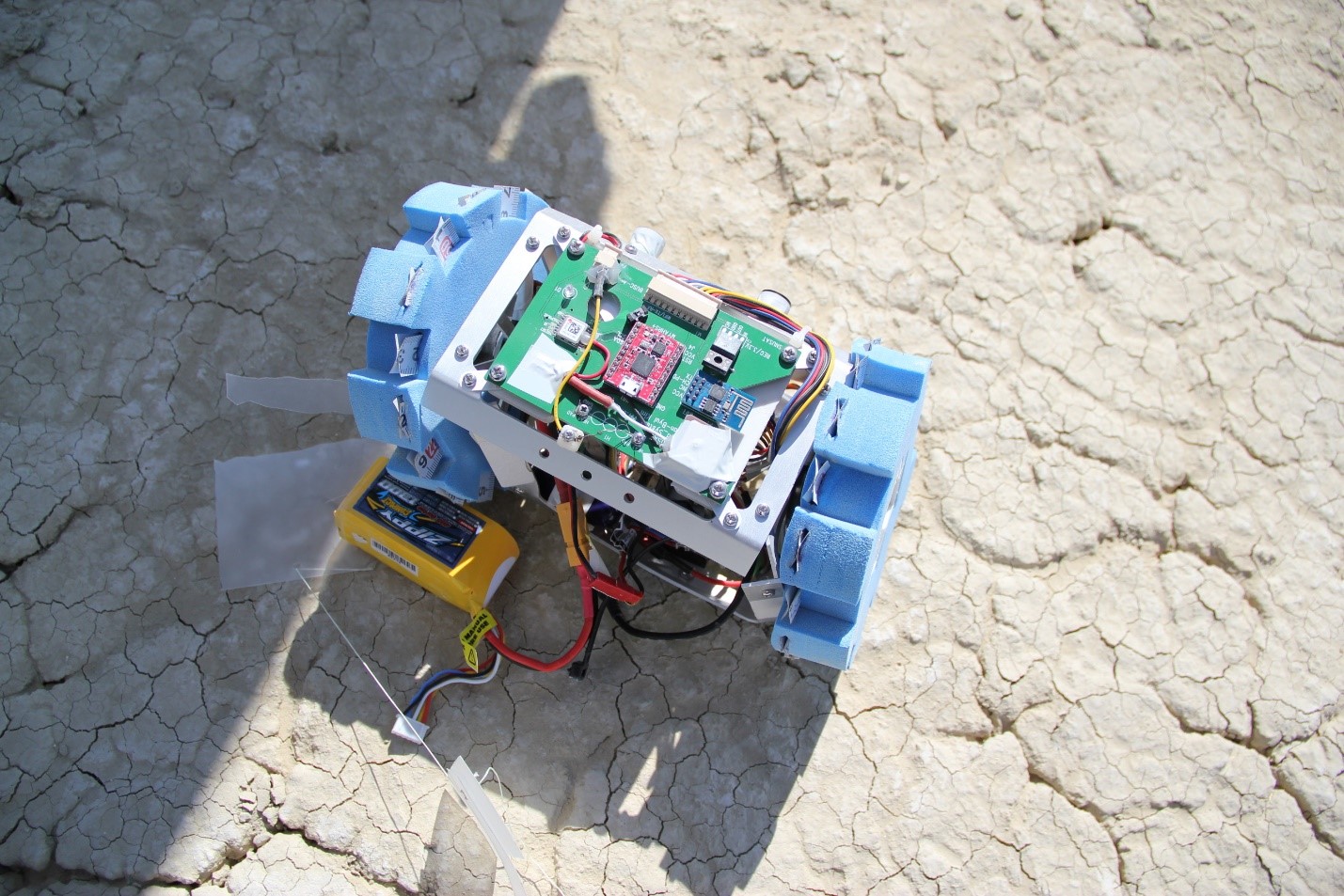 Figure 8 after impact
6. Reference
6.1